


Piazza Unità d’Italia
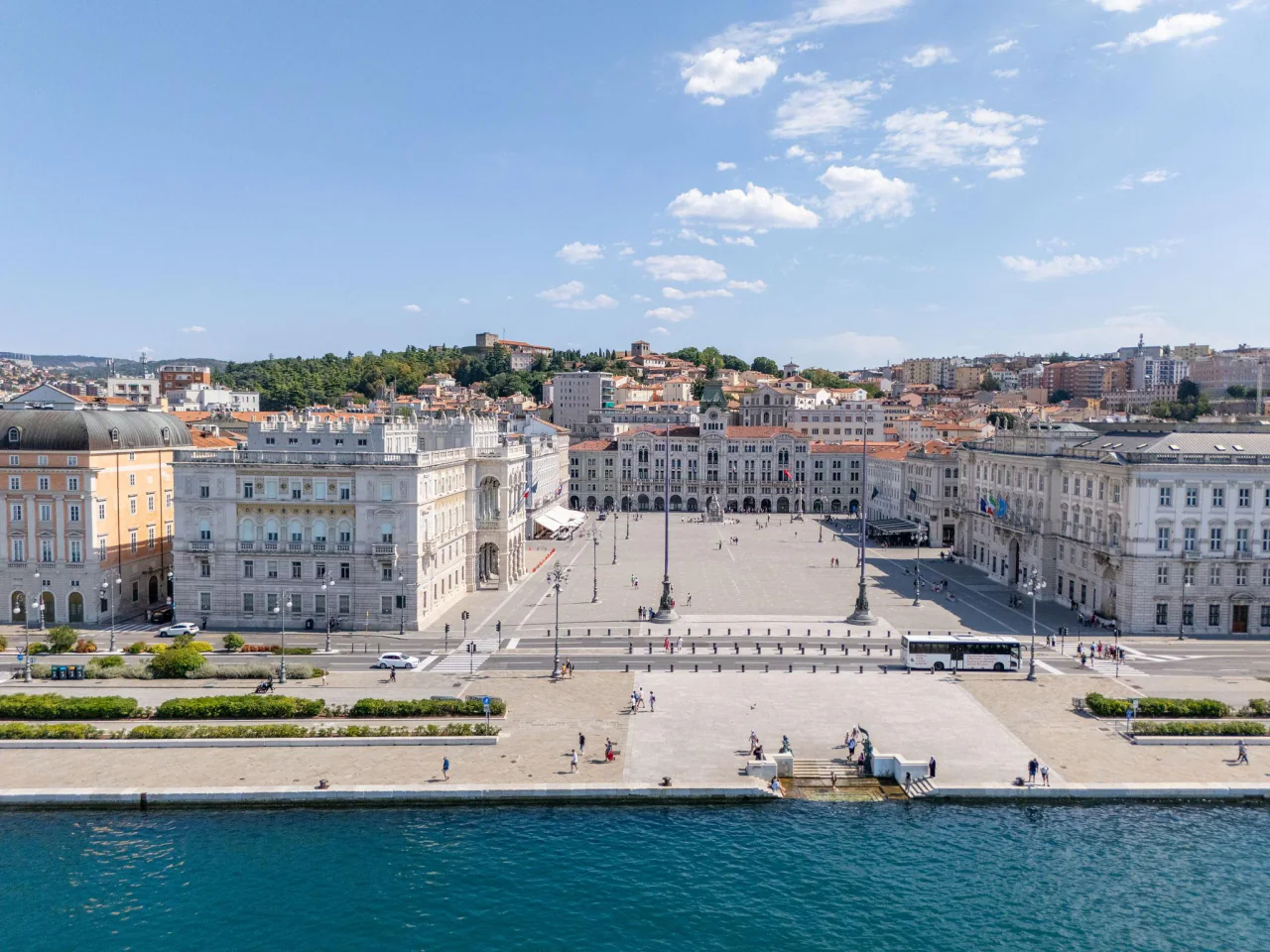
Spend time in the monumental seafront square at the heart of Trieste.
Plan ferries to and from Trieste in Italy, with route choices, harbour guidance and ideas for the rest of your journey.
Choose your route, travel dates, passengers and vehicle to compare current sailings and fares. Search all ferry routes.
Check your ports, passengers, vehicle and dates before completing the reservation.
Trieste is a distinctive Adriatic city shaped by Italian, Slovenian and Habsburg influences, with a spectacular waterfront and seasonal fast passenger links across the northern Adriatic.
Piazza Unità d’Italia opens directly onto the sea and provides one of Europe’s most dramatic civic spaces. Grand 19th-century buildings, cafés and the waterfront promenade capture Trieste’s former role as the principal seaport of the Habsburg Empire.
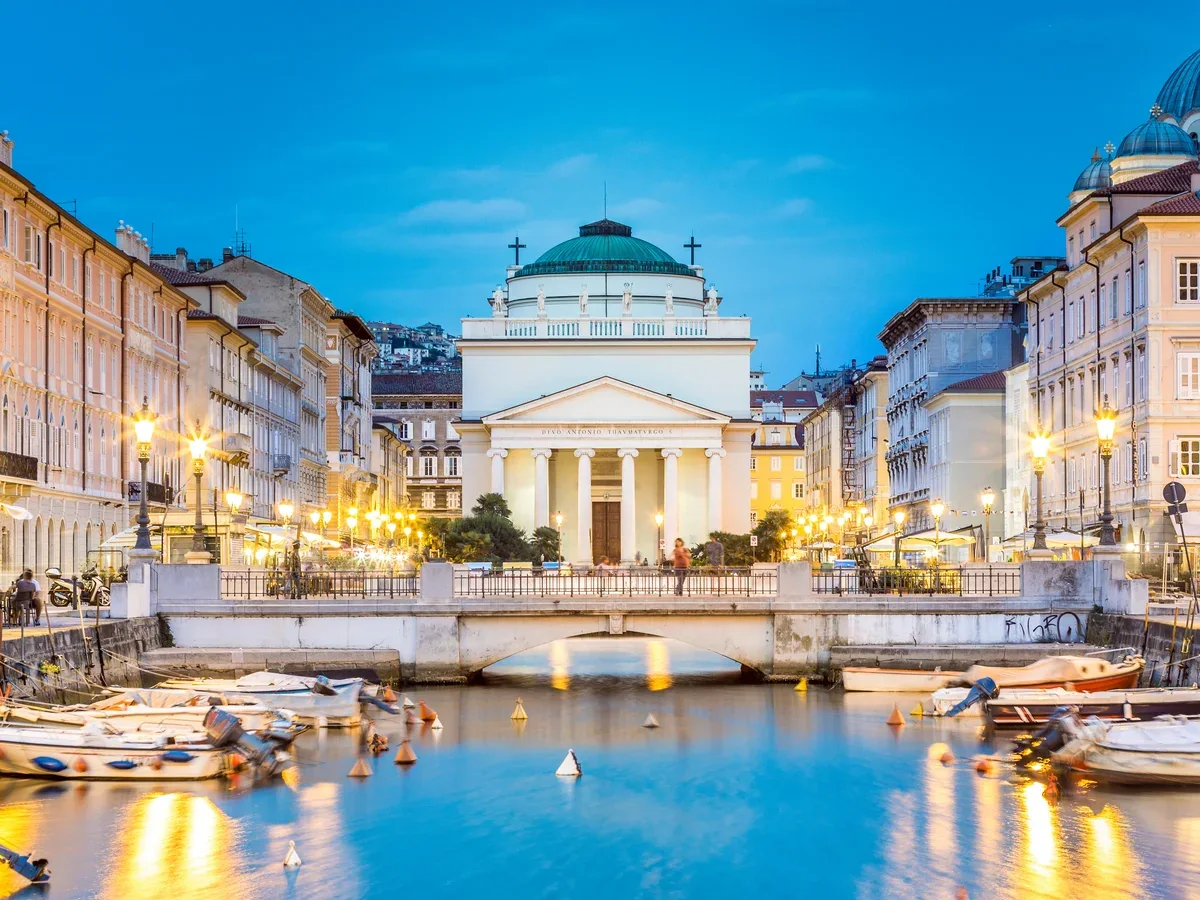
The historic centre extends through the Canal Grande, Borgo Teresiano and older lanes climbing towards San Giusto. This mixture of ordered imperial streets and more irregular medieval quarters gives the city a character unlike most other Italian ports.
Trieste’s coffee culture is a central part of daily life. Historic cafés such as Caffè San Marco reflect the city’s literary associations, while local food combines Italian, Slovenian, Austrian and Adriatic influences.
Miramare Castle sits on the coast north of the centre and is one of the region’s signature attractions. The surrounding park, Gulf of Trieste views and nearby Barcola waterfront make it easy to turn a short ferry stop into a fuller city stay.
The Karst plateau rises behind Trieste, offering caves, vineyards, villages and cross-border excursions into Slovenia. Ljubljana, Venice and the Istrian coast are all realistic onward destinations by road or rail from the city.
Passenger ferry services from Trieste are seasonal rather than year-round car ferries. Liberty Lines’ 2026 summer programme runs from Molo IV to Piran, Poreč, Rovinj and Mali Lošinj, giving foot passengers and cyclists an attractive alternative to road travel around the top of the Adriatic.
Trieste blends imperial architecture, literary cafés, sea views and easy access to the Karst and Istrian coasts.
Spend time in the monumental seafront square at the heart of Trieste.
Visit the coastal Habsburg residence and landscaped park north of the city.
Walk the café-lined canal through the elegant Borgo Teresiano district.
Climb to the cathedral and castle for history and views over the city and Gulf of Trieste.
Experience Trieste’s distinctive coffee culture in grand literary cafés and traditional bars.
Explore caves, vineyards, villages and cross-border scenery behind the city.
Browse Trieste walking tours, Miramare visits, Karst excursions, food experiences and Istrian day trips to combine with your sea journey.
Tours and activities displayed in this section are supplied through Viator. Availability, descriptions and prices are provided by the activity supplier and can change.
These are fast passenger services rather than conventional car ferries. Liberty Lines allows bicycles subject to availability and advises same-day ticket purchasers to reach the ticket office well before departure, so check baggage, bicycle and check-in rules when booking.
For the 2026 summer season, Liberty Lines publishes services from 25 June to 31 August linking Trieste with Piran in Slovenia and Poreč, Rovinj and Mali Lošinj in Croatia. The service operates on selected days rather than as a year-round ferry network.
Liberty Lines’ 2026 seasonal passenger service departs from Molo IV at the Trieste Passenger Terminal, close to the central waterfront and railway station area.
Trieste’s waterfront sights are easy to explore on foot, while rail and bus links support onward travel to Venice, Slovenia and the wider Friuli region.
Piazza Unità, Canal Grande, Molo Audace and the central café districts are all within a compact walking area.
Trieste Centrale has rail links towards Venice, Udine and other Italian cities, with international onward options. Find Trieste rail tickets here...
Local buses, taxis or a car make it easier to reach Miramare, Barcola, Karst villages and cross-border attractions in Slovenia.
The central waterfront is ideal for Molo IV and major sights, while Borgo Teresiano offers easy access to Trieste Centrale, cafés and the Canal Grande.
Liberty Lines’ seasonal passenger service uses Molo IV at the Trieste Passenger Terminal on the central waterfront.
Liberty Lines publishes seasonal 2026 services from Trieste to Piran, Poreč, Rovinj and Mali Lošinj.
No. The current Liberty Lines northern Adriatic programme is seasonal, running during the summer period rather than all year.
No conventional passenger cars are carried on these fast passenger services. Bicycles can be accepted subject to availability and operator rules.
Yes. Molo IV is on the central waterfront close to major city sights and within practical reach of Trieste Centrale railway station.
Visit Piazza Unità d’Italia, Miramare Castle, Canal Grande, San Giusto and the city’s historic cafés.
Yes. Trieste Centrale has regular rail connections towards Venice and the wider Italian network.
Yes, especially in July and August because the seasonal programme has limited operating days and bicycle space can also be restricted.
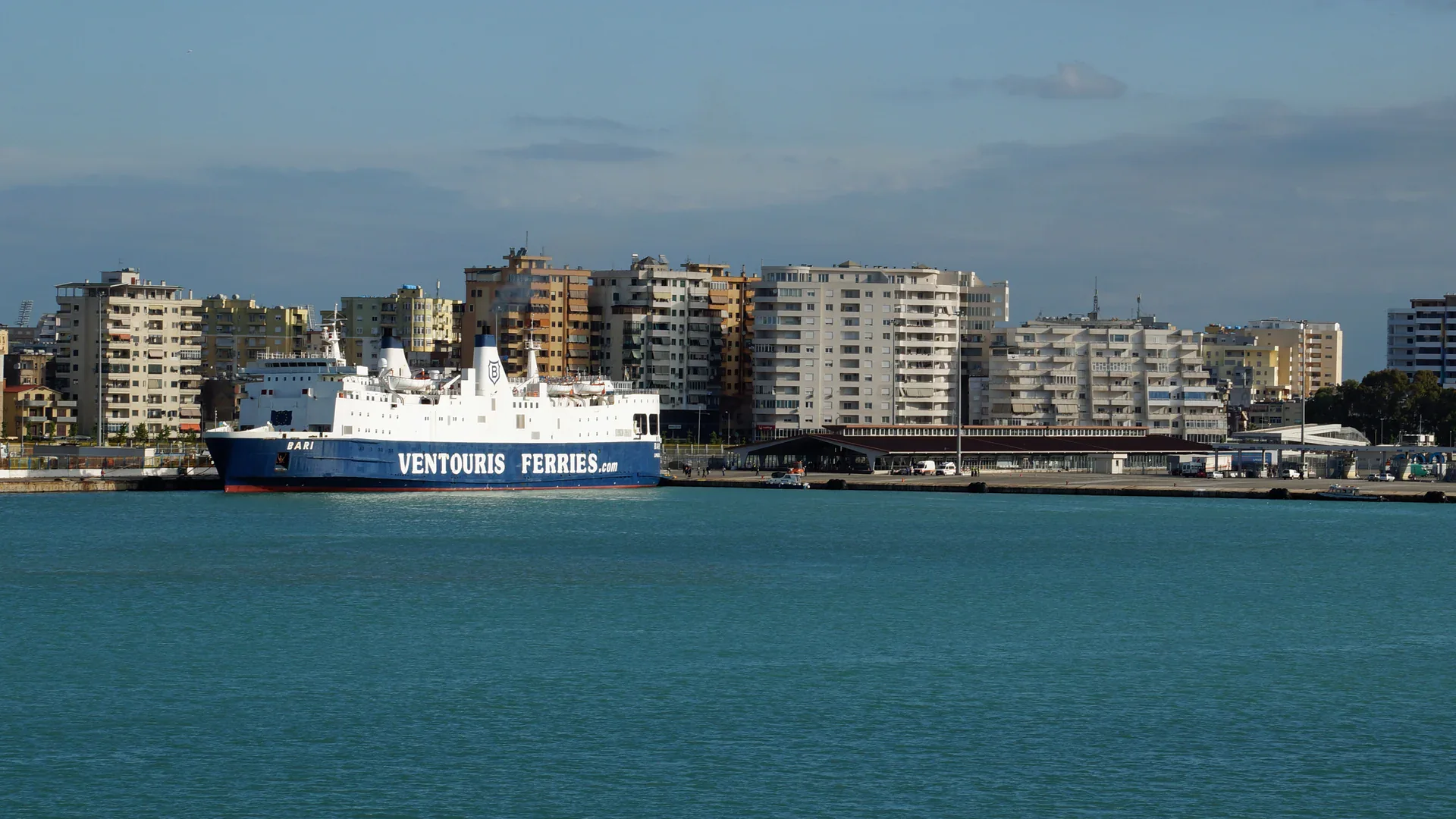
The route catalogue includes departures towards Durrës. Each direction has its own guide so that you can check the correct starting pier and arrival arrangements. A listed connection may be seasonal, a multi-stop itinerary or a former service; read its service status before making plans.
No matches. Try a different place name or clear the filters.
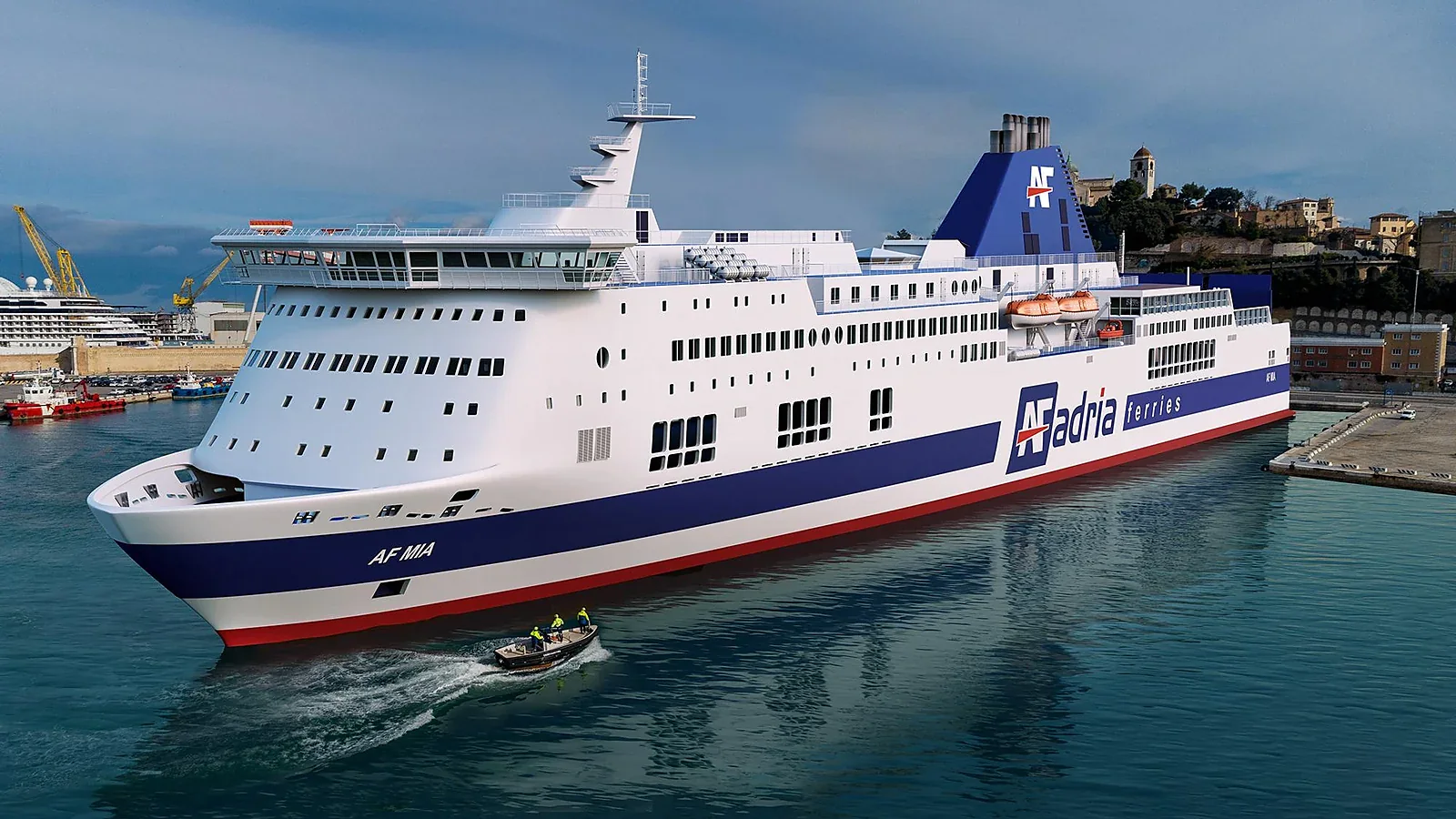
Adria Ferries
Trieste is a major northern Adriatic port close to Slovenia and well placed for road travellers from north-eastern Italy and Central Europe. Check the exact Adria Ferries terminal and gate on the booking because the port complex handles several passenger and freight activities.
Pin the precise ferry terminal before travelling to Trieste. Some towns have separate passenger quays, vehicle terminals and excursion-boat landings. The operator’s address on your confirmation is more useful than a town-centre map pin.
For a car journey, leave a margin for the final approach, queueing and check-in. Without a car, confirm the last part of the journey from the railway station or bus stop. A short map distance may involve port roads or areas closed to pedestrians; use a confirmed transfer or walking route.
Keep your booking reference and required documents accessible. If you need step-free boarding, help with luggage or space for a bicycle, arrange it before the day of travel. Small piers and large vehicle terminals can offer very different facilities.
Plan each sea leg as a separate part of the trip. Check the arrival port, transfer distance, vehicle restrictions and the time before the next sailing. A ticket sold by one company or booking provider does not automatically create a protected connection with another.
Check your arrival time against accommodation check-in and the next transport service. If this is an island stay, organise the return ferry before fixing a mainland flight or a long-distance train. The outward and return ports do not have to be the same, but separate tickets can have different conditions.
European ferries for UK travellers · Detailed planning advice
Check live sailing options, passenger fares, vehicle prices and onboard accommodation for your travel dates.


