

Plaza de España
Start in the city’s main waterfront square and explore the surrounding pedestrian centre.
Plan ferries to and from Santa Cruz de Tenerife in Spain, with route choices, harbour guidance and ideas for the rest of your journey.
Choose your route, travel dates, passengers and vehicle to compare current sailings and fares. Search all ferry routes.
Check your ports, passengers, vehicle and dates before completing the reservation.
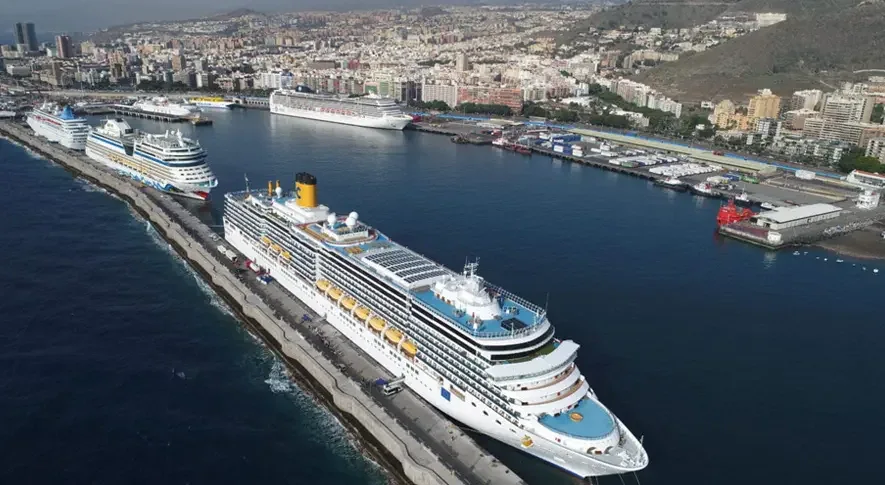
Santa Cruz de Tenerife is the island’s capital and one of the Canary Islands’ principal passenger-ferry hubs, combining an energetic waterfront city with fast access to Gran Canaria and long-distance links to mainland Spain.
Plaza de España and the surrounding waterfront form the heart of Santa Cruz, with pedestrian streets, cafés and shops extending inland towards the historic centre.
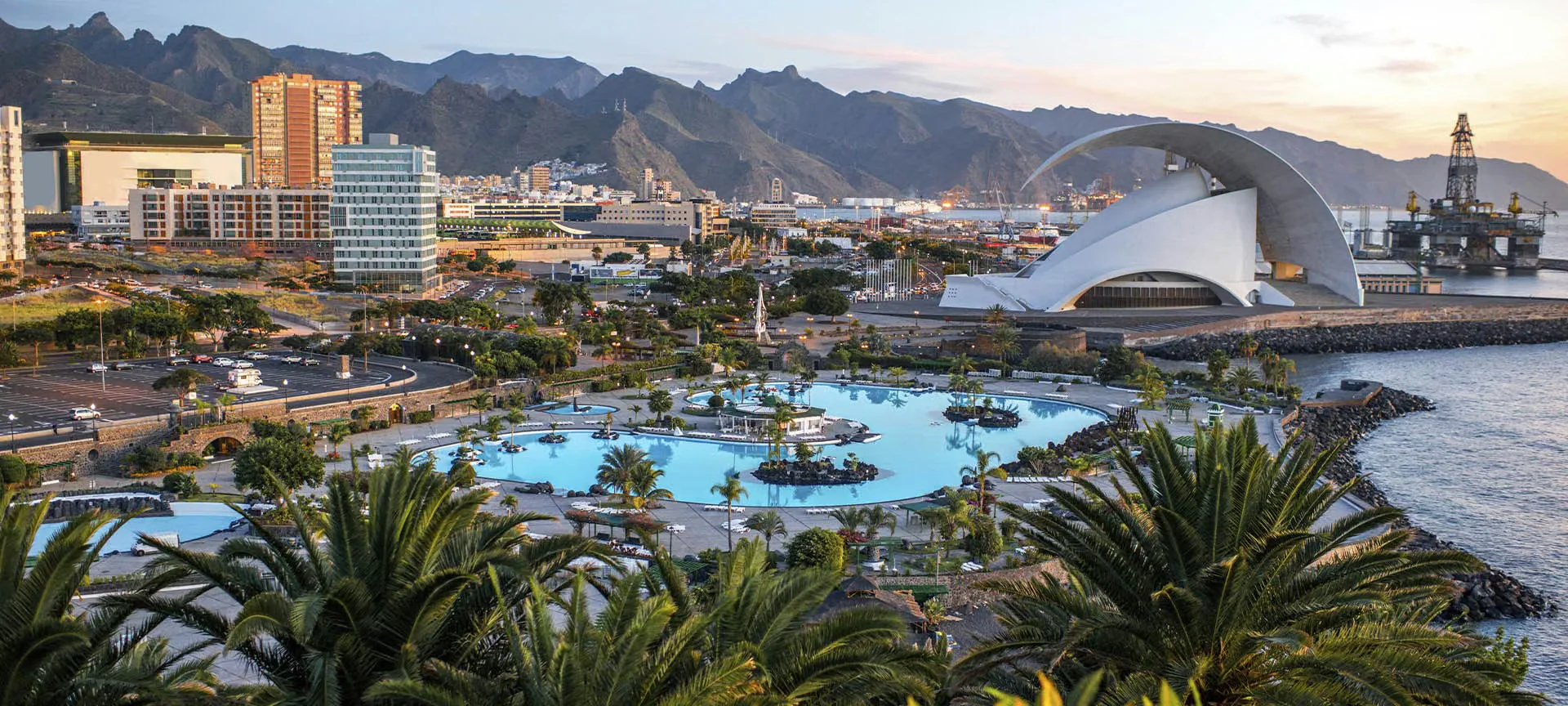
The white curves of the Auditorio de Tenerife create the city’s most recognisable modern landmark, while the nearby Palmetum transforms a former industrial site into a striking botanical garden overlooking the sea.
Mercado de Nuestra Señora de África is one of the best places to experience local produce and everyday city life, and TEA Tenerife Espacio de las Artes adds contemporary art, exhibitions and architecture close to the centre.
Santa Cruz also makes a strong base for exploring the green Anaga Rural Park in Tenerife’s north-east. Mountain roads, laurel forest and coastal villages feel dramatically different from the drier resort landscapes farther south.
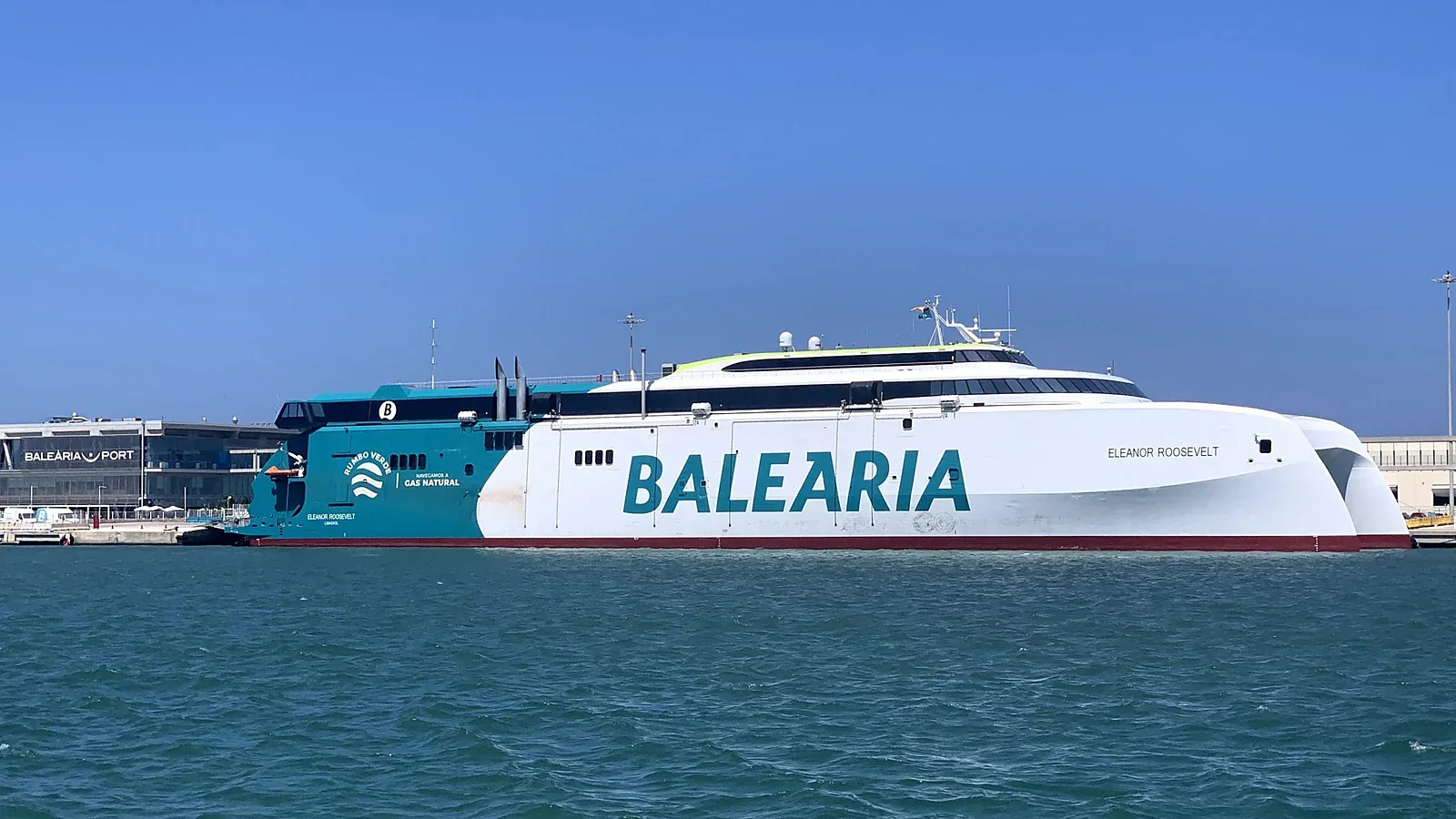
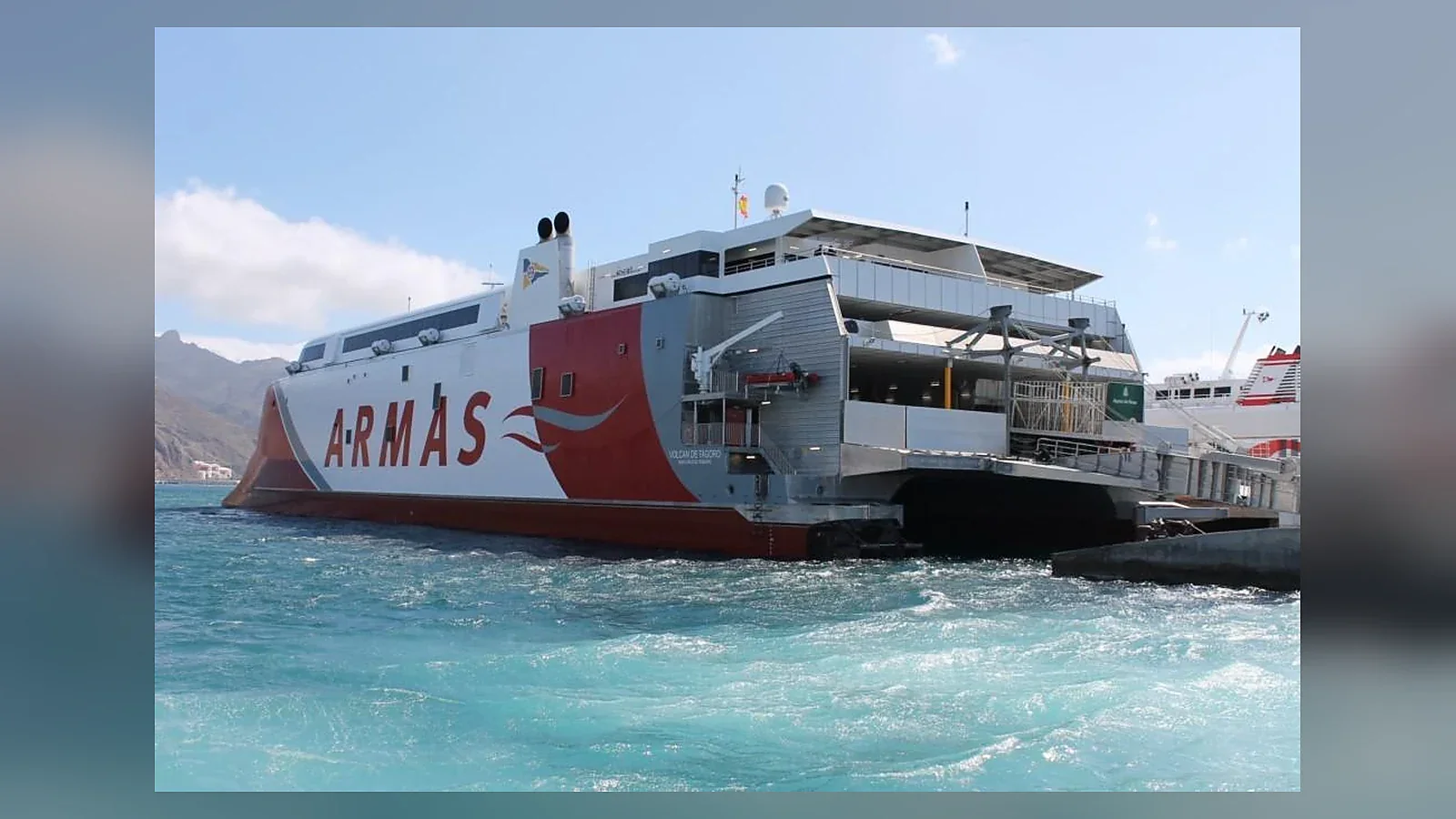
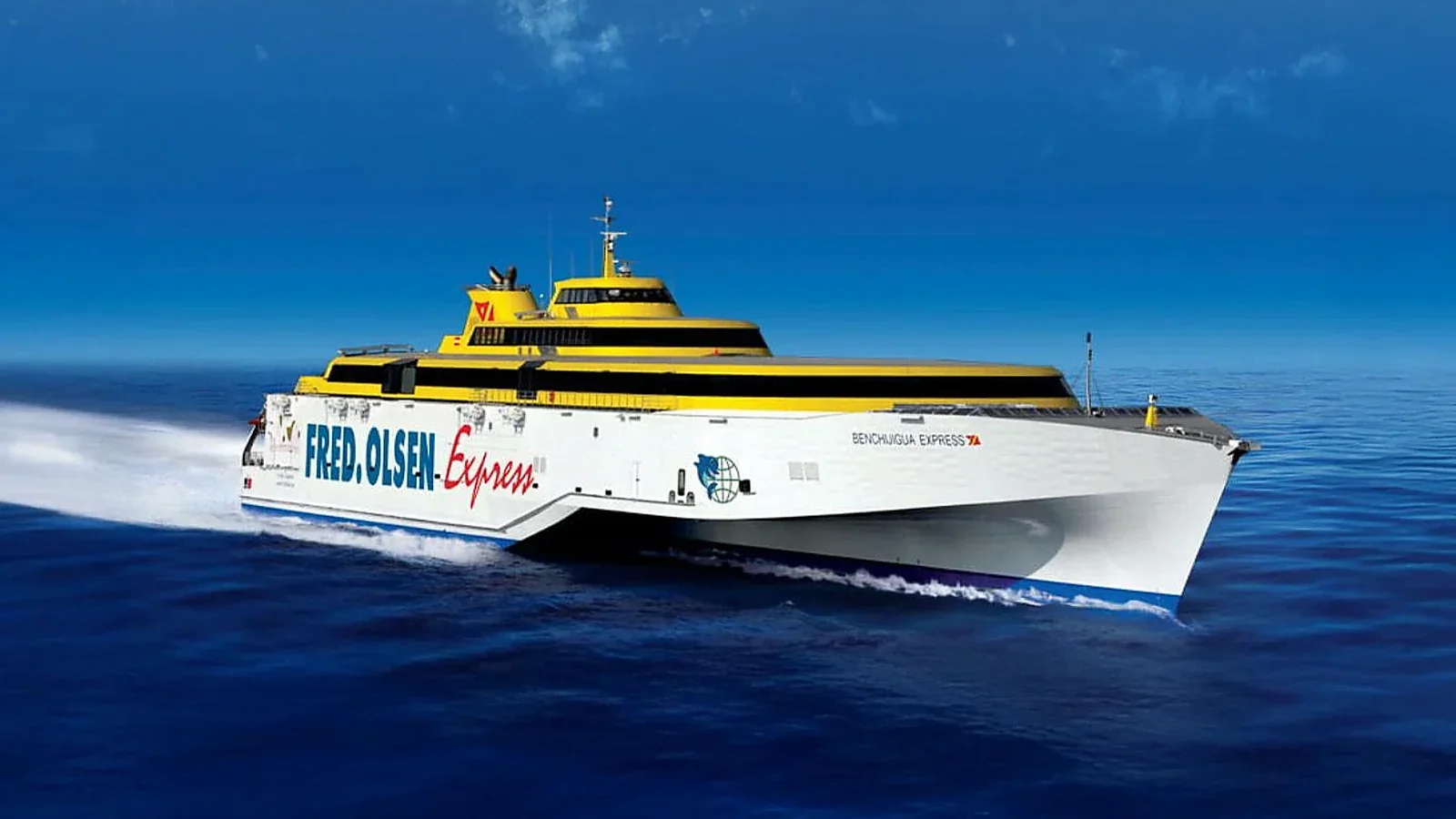
Ferry connections are unusually varied. Fred. Olsen Express runs the fast route from Santa Cruz to Agaete in Gran Canaria and also operates the Tenerife–Huelva mainland service, while Baleària Canarias runs frequent Santa Cruz–Las Palmas crossings and 2026 mainland connections.
The port sits beside the city rather than far outside it, so foot passengers can move easily between the terminal area, central bus interchange and city centre. Always confirm the exact quay, especially for long-distance mainland sailings, because different operators and routes can use different boarding areas.
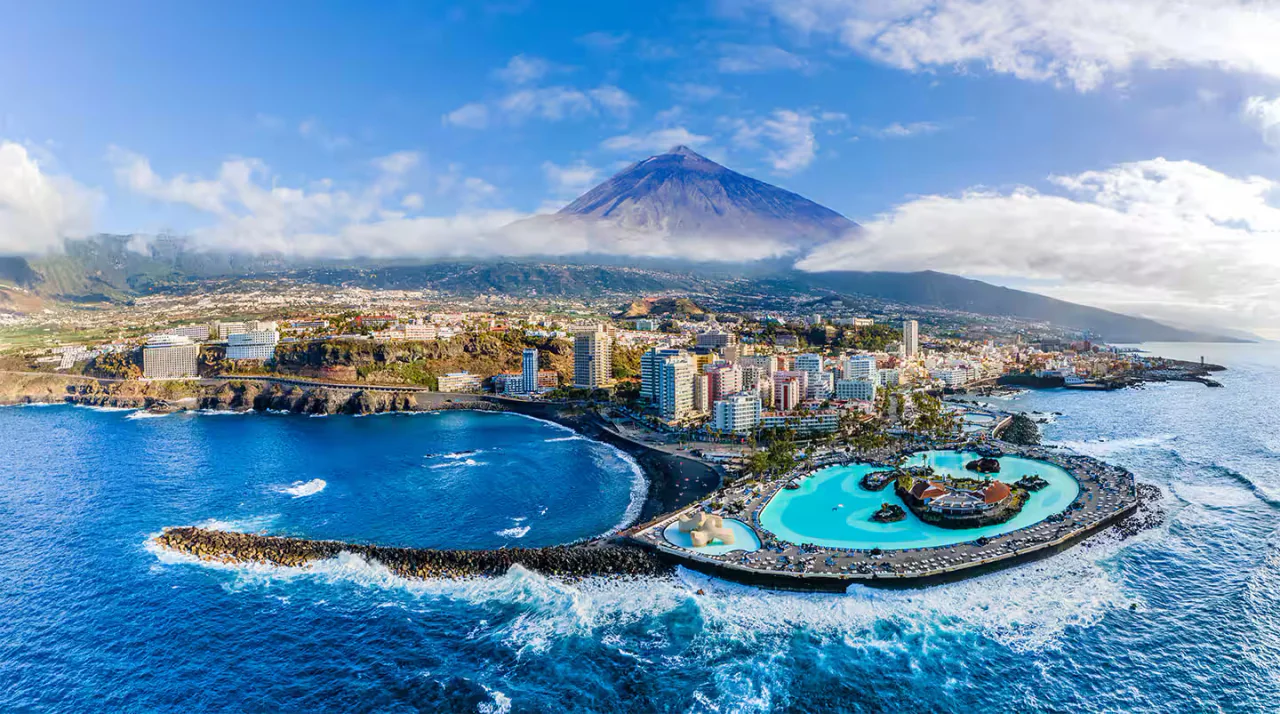
Santa Cruz combines city culture and markets with one of Tenerife’s best-positioned ferry hubs and quick access to the wild Anaga peninsula.
Start in the city’s main waterfront square and explore the surrounding pedestrian centre.
See Santiago Calatrava’s dramatic white concert hall beside the port.
Browse produce, local food and cafés in Santa Cruz’s atmospheric central market.
Walk a distinctive botanical garden filled with palms and views over the Atlantic.
Visit contemporary exhibitions, architecture and the city library in one cultural complex.
Take a day trip into laurel forest, mountain viewpoints and remote coastal villages north-east of the city.
Browse Santa Cruz sightseeing, Anaga tours, Tenerife food experiences and island excursions to combine with your ferry journey.
Tours and activities displayed in this section are supplied through Viator. Availability, descriptions and prices are provided by the activity supplier and can change.
Both inter-island and mainland services can carry vehicles on appropriate sailings. Check the booked operator’s cut-off carefully; Fred. Olsen states that vehicle boarding closes 40 minutes before departure and foot-passenger boarding 20 minutes before departure unless the ticket says otherwise.
Fred. Olsen lists its city terminal at Edificio Puerto Ciudad, Muelle Ribera. The Huelva ferry boards from a different dock within the wider port, so passengers should follow the route-specific access instructions rather than relying only on a generic map pin.
Fred. Olsen Express uses the Port of Santa Cruz de Tenerife for its fast ferry to Agaete in Gran Canaria and its long-distance Huelva service. Baleària Canarias also operates passenger and vehicle links from Santa Cruz, including the direct Las Palmas route in 2026.
The port sits close to central Santa Cruz, with buses and trams providing straightforward city and island connections.
Plaza de España and central Santa Cruz are close to the passenger-port area, although the exact walking route depends on your quay.
Tenerife’s tram links Santa Cruz with La Laguna, while TITSA buses connect the main interchange with towns and visitor areas across the island.
For Los Cristianos and southern Tenerife, use the TF-1 by car or long-distance buses; some ferry operators also provide dedicated connection services for specific itineraries.
Central accommodation is convenient for the port, restaurants, markets and public transport, while travellers with a very early mainland sailing should double-check the exact boarding quay before choosing a hotel.
Passenger ferries use the Port of Santa Cruz de Tenerife. Fred. Olsen’s main city terminal is at Edificio Puerto Ciudad on Muelle Ribera, while some long-distance sailings use a different quay.
Current services include Gran Canaria links to Agaete and Las Palmas plus mainland Spain services to Huelva, with selected 2026 Cádiz connections also operating.
Fred. Olsen Express and Baleària Canarias operate major passenger services from the port in 2026.
Yes on applicable inter-island and mainland passenger ferries. Vehicle space should be booked in advance.
Fred. Olsen Express publishes an 80-minute fast-ferry crossing between Santa Cruz de Tenerife and Agaete.
Yes. Santa Cruz has long-distance ferry links with Huelva, and 2026 also includes selected direct Cádiz–Tenerife services.
Plaza de España, the Auditorio, Mercado de Nuestra Señora de África, Palmetum, TEA and an excursion into Anaga are strong choices.
Follow your ticket. Fred. Olsen states boarding closes 40 minutes before departure for vehicles and 20 minutes for foot passengers unless otherwise specified.
The route catalogue includes departures towards Agaete, Cádiz, Huelva, Las Palmas. Each direction has its own guide so that you can check the correct starting pier and arrival arrangements. A listed connection may be seasonal, a multi-stop itinerary or a former service; read its service status before making plans.
No matches. Try a different place name or clear the filters.
Santa Cruz de Tenerife is the main ferry hub on the island’s north-east coast. Check the exact Fred. Olsen terminal and allow time for city traffic, security and vehicle marshalling.
Pin the precise ferry terminal before travelling to Santa Cruz de Tenerife. Some towns have separate passenger quays, vehicle terminals and excursion-boat landings. The operator’s address on your confirmation is more useful than a town-centre map pin.
For a car journey, leave a margin for the final approach, queueing and check-in. Without a car, confirm the last part of the journey from the railway station or bus stop. A short map distance may involve port roads or areas closed to pedestrians; use a confirmed transfer or walking route.
Keep your booking reference and required documents accessible. If you need step-free boarding, help with luggage or space for a bicycle, arrange it before the day of travel. Small piers and large vehicle terminals can offer very different facilities.
Plan each sea leg as a separate part of the trip. Check the arrival port, transfer distance, vehicle restrictions and the time before the next sailing. A ticket sold by one company or booking provider does not automatically create a protected connection with another.
Check your arrival time against accommodation check-in and the next transport service. If this is an island stay, organise the return ferry before fixing a mainland flight or a long-distance train. The outward and return ports do not have to be the same, but separate tickets can have different conditions.
European ferries for UK travellers · Detailed planning advice
Check live sailing options, passenger fares, vehicle prices and onboard accommodation for your travel dates.