


Riga Old Town
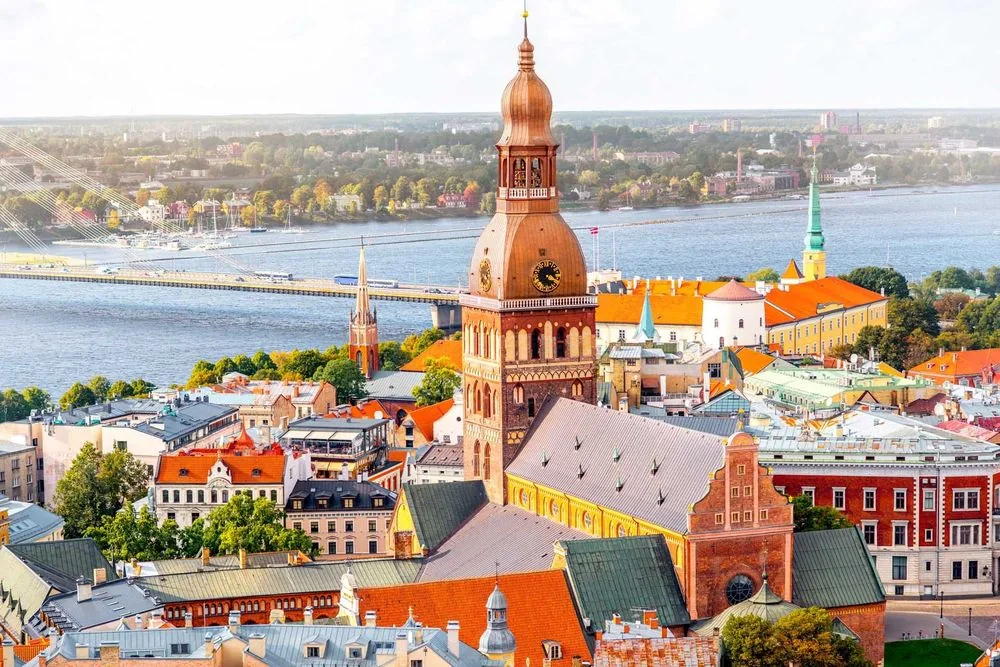
Explore medieval streets, squares and church towers beside the Daugava.
Plan ferries to and from Riga in Latvia, with route choices, harbour guidance and ideas for the rest of your journey.
Choose your route, travel dates, passengers and vehicle to compare current sailings and fares. Search all ferry routes.
Check your ports, passengers, vehicle and dates before completing the reservation.
Riga is one of the Baltic region’s strongest city-break destinations, with a compact medieval core, exceptional Art Nouveau districts and a broad riverfront along the Daugava.
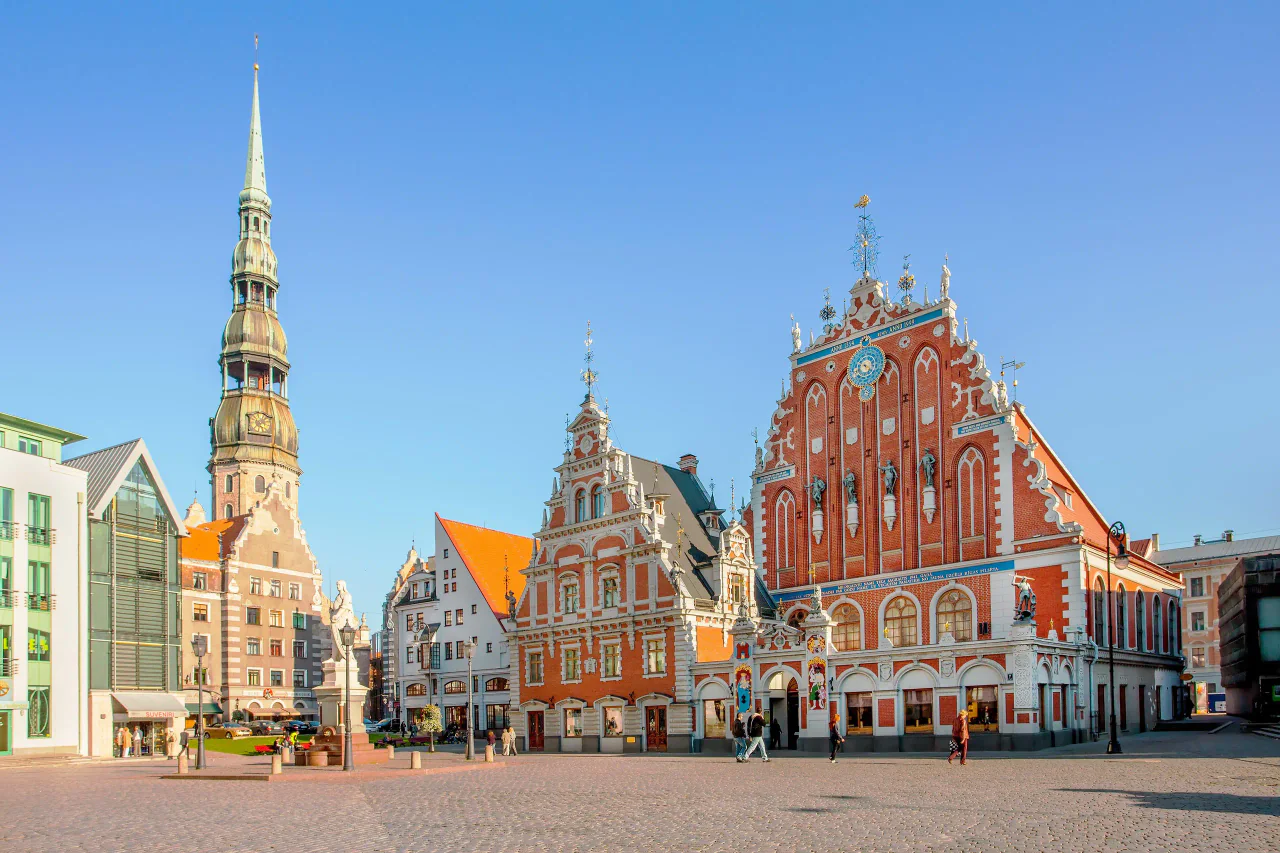
The Old Town brings together Riga Cathedral, St Peter’s Church, medieval lanes and the reconstructed House of the Black Heads around Town Hall Square.
Beyond the old centre, Alberta iela and the surrounding streets contain one of Europe’s richest concentrations of Art Nouveau architecture, while Riga Central Market occupies vast former Zeppelin hangars.
Riga’s port is active for cruise ships and commercial shipping in 2026, but there is no current regular international car-ferry service from the city comparable with the former Stockholm route.
For regular vehicle ferry travel from Latvia, Stena Line’s active passenger routes use Ventspils for Nynäshamn in Sweden and Liepāja for Travemünde in Germany.
Riga is well suited to a two- or three-day city break, with most central attractions walkable and a strong café, restaurant and cultural scene extending beyond the Old Town. The riverfront and canal parks add open space between the main historic districts.
The city also works as a base for wider Latvian travel. Jūrmala’s Baltic beaches are a short train ride away, while Sigulda and the Gauja National Park are popular inland excursions for travellers continuing beyond the capital.
Riga rewards a city break with medieval streets, decorative architecture, markets and a lively cultural scene.
Explore medieval streets, squares and church towers beside the Daugava.
See one of Riga’s most recognisable restored historic façades on Town Hall Square.
Walk Alberta iela and nearby streets for extraordinary early-20th-century architecture.
Browse food halls inside huge converted Zeppelin hangars beside the old centre.
Walk the broad river edge for skyline and bridge views.
Add ballet, opera or a walk through the surrounding parkland to a city itinerary.
Browse Riga Old Town walks, food tours, Art Nouveau experiences and Latvia day trips during your stay.
Tours and activities displayed in this section are supplied through Viator. Availability, descriptions and prices are provided by the activity supplier and can change.
If your journey combines Riga with a ferry, plan the overland connection to the relevant west-coast port and confirm the operator terminal before travel.
Latvia’s active regular passenger-ferry network instead uses Ventspils for Stena Line sailings to Nynäshamn and Liepāja for the Travemünde route.
Riga Passenger Port handles cruise traffic and other passenger vessels, but current 2026 port and operator information does not show a regular international car-ferry service from Riga.
Riga is easy to explore on foot and by public transport, with strong bus and rail links for travel around Latvia.
Old Riga, the Central Market and much of the Art Nouveau district are within a comfortable central walking area.
Riga Central Station is the country’s main rail hub for regional journeys. Find Riga rail tickets here...
Allow several hours overland for Ventspils or Liepāja when combining a Riga stay with an international ferry.
Old Riga is ideal for first-time sightseeing, while the central boulevards and Art Nouveau area offer easy transport and a slightly quieter base.
Current Riga port and operator information does not show a regular international car-ferry route from Riga. The port is active for cruise and commercial traffic.
Stena Line currently serves Ventspils–Nynäshamn and Liepāja–Travemünde.
The former regular Riga–Stockholm service is not part of Tallink’s current 2026 regular route network.
Not on a current regular international route. Vehicle travellers should use Ventspils or Liepāja instead.
Old Riga, the House of the Black Heads, Art Nouveau district, Central Market and Daugava riverfront are major highlights.
Yes. The centre is walkable and trams, buses and trains cover the wider city and region.
Travel overland to Ventspils for Sweden or Liepāja for Germany, then follow the Stena Line terminal instructions.
Yes. Riga is a strong city-break stop even though the regular international car-ferry gateways are elsewhere in Latvia.
Pin the precise ferry terminal before travelling to Riga. Some towns have separate passenger quays, vehicle terminals and excursion-boat landings. The operator’s address on your confirmation is more useful than a town-centre map pin.
For a car journey, leave a margin for the final approach, queueing and check-in. Without a car, confirm the last part of the journey from the railway station or bus stop. A short map distance may involve port roads or areas closed to pedestrians; use a confirmed transfer or walking route.
Keep your booking reference and required documents accessible. If you need step-free boarding, help with luggage or space for a bicycle, arrange it before the day of travel. Small piers and large vehicle terminals can offer very different facilities.
Plan each sea leg as a separate part of the trip. Check the arrival port, transfer distance, vehicle restrictions and the time before the next sailing. A ticket sold by one company or booking provider does not automatically create a protected connection with another.
Check your arrival time against accommodation check-in and the next transport service. If this is an island stay, organise the return ferry before fixing a mainland flight or a long-distance train. The outward and return ports do not have to be the same, but separate tickets can have different conditions.
European ferries for UK travellers · Detailed planning advice
Check live sailing options, passenger fares, vehicle prices and onboard accommodation for your travel dates.


